There's just something about a really good racing cycle, isn't there? That sleek profile, the purposeful stance, the promise of speed just waiting to be unleashed. For me, and I bet for many of you reading this, a high-performance road bike represents not just a piece of engineering, but a gateway to exhilaration, personal challenge, and frankly, a darn good time on two wheels. To be honest, the industry has seen some truly wild innovations lately, pushing the boundaries of what these machines can do.
Current Trends: Aero, Integration, and the Ever-Lightening Load
If you've been following the cycling world, you'll know that aerodynamic efficiency isn't just for time trial bikes anymore. Everything, from frame shapes to handlebars and even wheel designs, is being sculpted to cheat the wind. We're seeing more integrated cable routing, hidden bolts, and even proprietary components that form a seamless system. And weight? That's still king, of course. Manufacturers are relentlessly chasing grams, though it seems we've hit a bit of a plateau for sheer lightness, with the focus now shifting to balancing weight with aerodynamics and stiffness. Another interesting trend is the blurring of lines between traditional racing bike types and endurance bikes, with many modern racers offering a surprising level of comfort for those longer hauls.
When we talk about the core of a racing cycle, the frame material is always a hot topic. While carbon fiber dominates the pro peloton, don't discount the humble alloy. Actually, advancements in aluminum alloys have made them incredibly competitive, offering excellent stiffness-to-weight ratios at a more palatable racing bike price. Take, for example, a robust Racing Alloy Frame Bicycle Road bike:
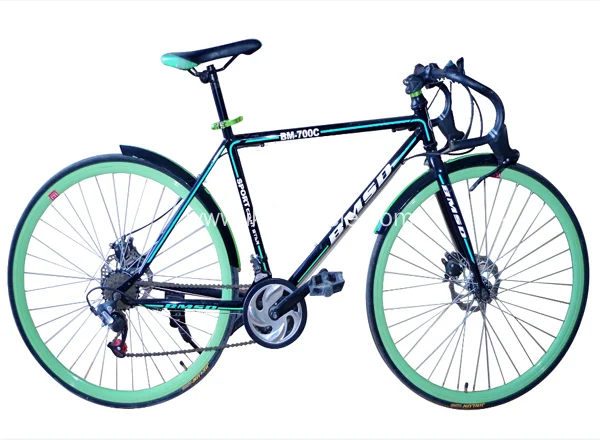
Key Specifications: An Alloy Contender
Component | Specification | Notes |
Frame Material | Alloy (e.g., 6061 T6 Aluminum) | Lightweight, durable, cost-effective |
Fork | Steel or Carbon (alloy steerer) | Carbon offers better vibration damping |
Drivetrain | Shimano Claris / Sora or similar | Reliable, precise shifting for everyday use |
Brakes | Rim Brake (Caliper) or Mechanical Disc | Disc brakes offer consistent stopping in all conditions |
Wheels | Double-wall Alloy Rims | Durable for training, real-world use may vary |
Weight (approx.) | ≈ 10-11 kg (22-24 lbs) | Depends on frame size and components |
Materials, Methods & Standards
The creation of a modern racing cycle, even an alloy one, is quite a process. Frame manufacturing often starts with high-grade aluminum alloys, typically 6061 or 7005 series, which are chosen for their excellent strength-to-weight ratio. These tubes are often hydroformed or mechanically manipulated to achieve specific aerodynamic profiles and stiffness characteristics. Welding, usually TIG (Tungsten Inert Gas), is a critical step, followed by heat treatment to restore the alloy's strength. After that, it's off to painting and assembly. Testing standards like ISO 4210 (Safety requirements for bicycles) are paramount, ensuring everything from frame integrity to brake performance meets stringent requirements. The service life of a well-maintained alloy frame can easily extend beyond 10-15 years, sometimes even more, especially for dedicated leisure riders, while competitive use might see a shorter lifespan due to higher stresses.
These bikes aren't just for competition, mind you. Their application scenarios are diverse. From serious amateur road races and criteriums to fast-paced group rides and long-distance charity events, a racing cycle excels where speed and efficiency are key. They're also fantastic for fitness enthusiasts looking to push their limits. Surprisingly, many customers say that even though they bought it for speed, they end up loving the precision handling and responsiveness for everyday commutes, assuming the terrain is smooth enough.
Customization & Vendor Landscape
One of the big advantages of today's market is the sheer amount of customization available. Whether it's choosing your specific groupset (Shimano, SRAM, Campagnolo), wheelset, or even getting a bespoke frame geometry, a custom racing bike is definitely within reach for many. OEM and ODM orders are very welcome in the industry, allowing for brands to tailor designs precisely for their target audience, whether it's specialized gearing for climbing or aero features for flat-out speed.
Let's take a quick look at how different vendors might stack up. This is a simplified comparison, I guess, but it gives a general idea:
Racing Cycle Vendor Comparison (Illustrative)
Vendor Archetype | Typical Focus | Price Range (Approx. racing bike price) | Pros |
Entry-Level/OEM Specialist (e.g., Ikia-Tanda) | Affordability, Robustness, ODM/OEM | $400 - $1000 | Great value, durable for daily use/training |
Mid-Range Performance (e.g., Giant, Trek) | Performance, Innovation, Wide Range | $1200 - $4000 | Excellent balance of tech, performance, and price |
High-End/Boutique (e.g., Pinarello, Specialized S-Works) | Elite Performance, Cutting-Edge Tech, Aero | $5000 - $15000+ | Marginal gains, prestige, top-tier components |
Case Studies & Certifications
While I can't name specific riders without permission, in the cycling world, every major race win is a testament to the bike's capabilities. Teams meticulously select their equipment based on terrain, ensuring their bikes are certified to UCI (Union Cycliste Internationale) standards for competition. These certifications go beyond basic safety, dictating frame dimensions and aerodynamic profiles to maintain a level playing field. Test data, often gleaned from wind tunnels and advanced stress analyses, drives design iterations. Customer feedback, particularly from discerning club riders and local racers, is invaluable, highlighting real-world comfort and handling attributes that spreadsheets can't fully capture.
Ultimately, whether you're chasing podiums or just the sunset, the modern racing cycle offers an incredible blend of technology, craftsmanship, and pure riding joy. It's a fantastic time to be a cyclist, isn't it?
Authoritative Citations:
1. ISO 4210:2023. Cycles — Safety requirements for bicycles. International Organization for Standardization.
2. UCI (Union Cycliste Internationale). Equipment and Rules. Retrieved from https://www.uci.org/
3. Brand websites and product pages (e.g., Shimano, SRAM, Trek, Giant, Specialized).